Where the Water Waits
In Where the Water Waits, photographer Michael Behlen explores California's Millerton Lake as a landscape suspended between control and uncertainty. Created over three years using rare monochromatic Polaroid Reclaimed Blue film, the project captures the reservoir during storms, transforming a heavily engineered water system into an atmospheric meditation on impermanence, memory, and the ever-changing relationship between land and water.
Photography Michael Behlen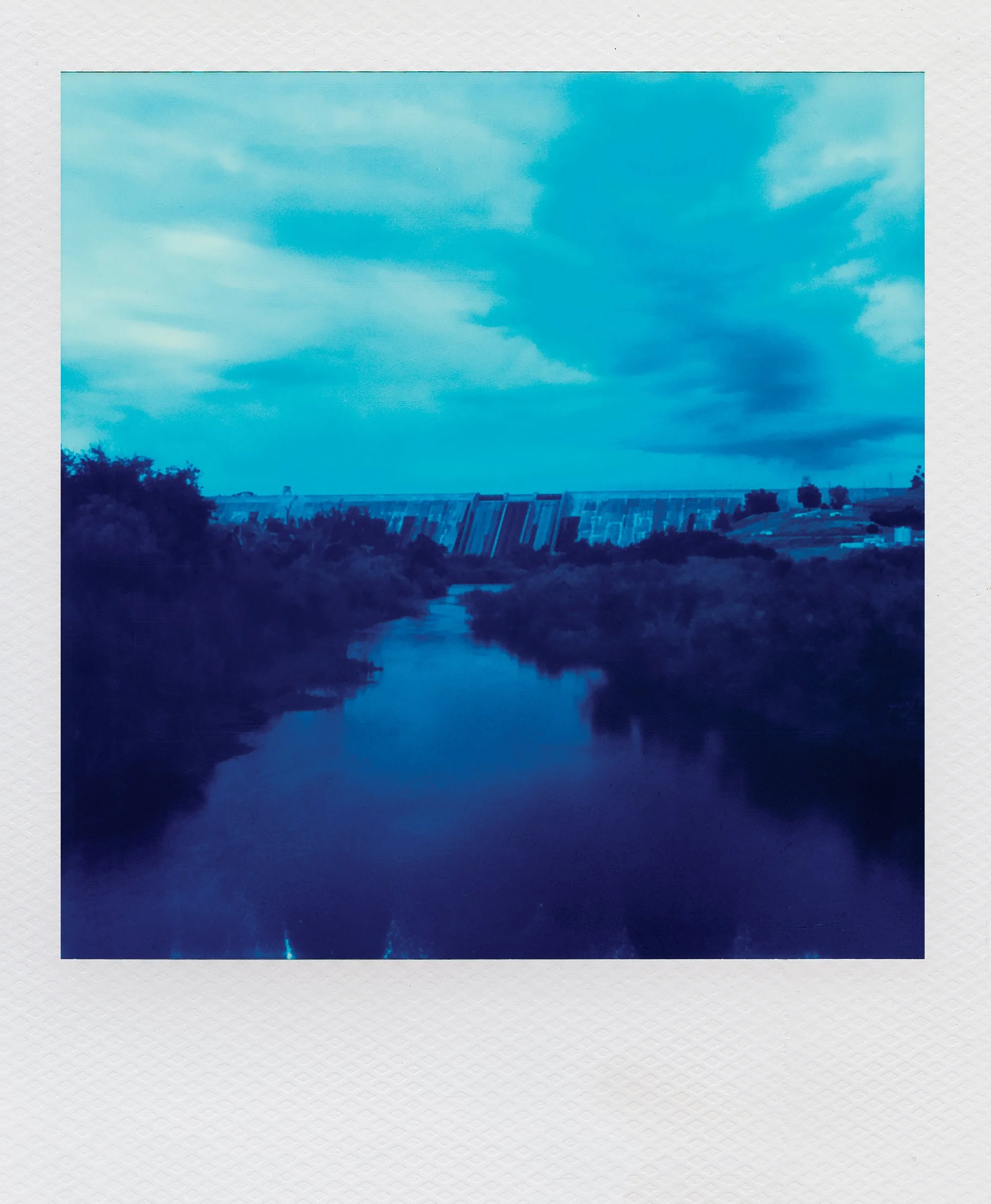
Where the Water Waits is a three-year-long photographic study of Millerton Lake in California’s Central Valley, a reservoir created by Friant Dam in 1942 as part of the Central Valley Project, a federal system built to store, control, and move water across the state. At Friant, the San Joaquin River is not so much carried as it is paused, its flow held in suspension before being released into the canals that distribute water across the valley floor.
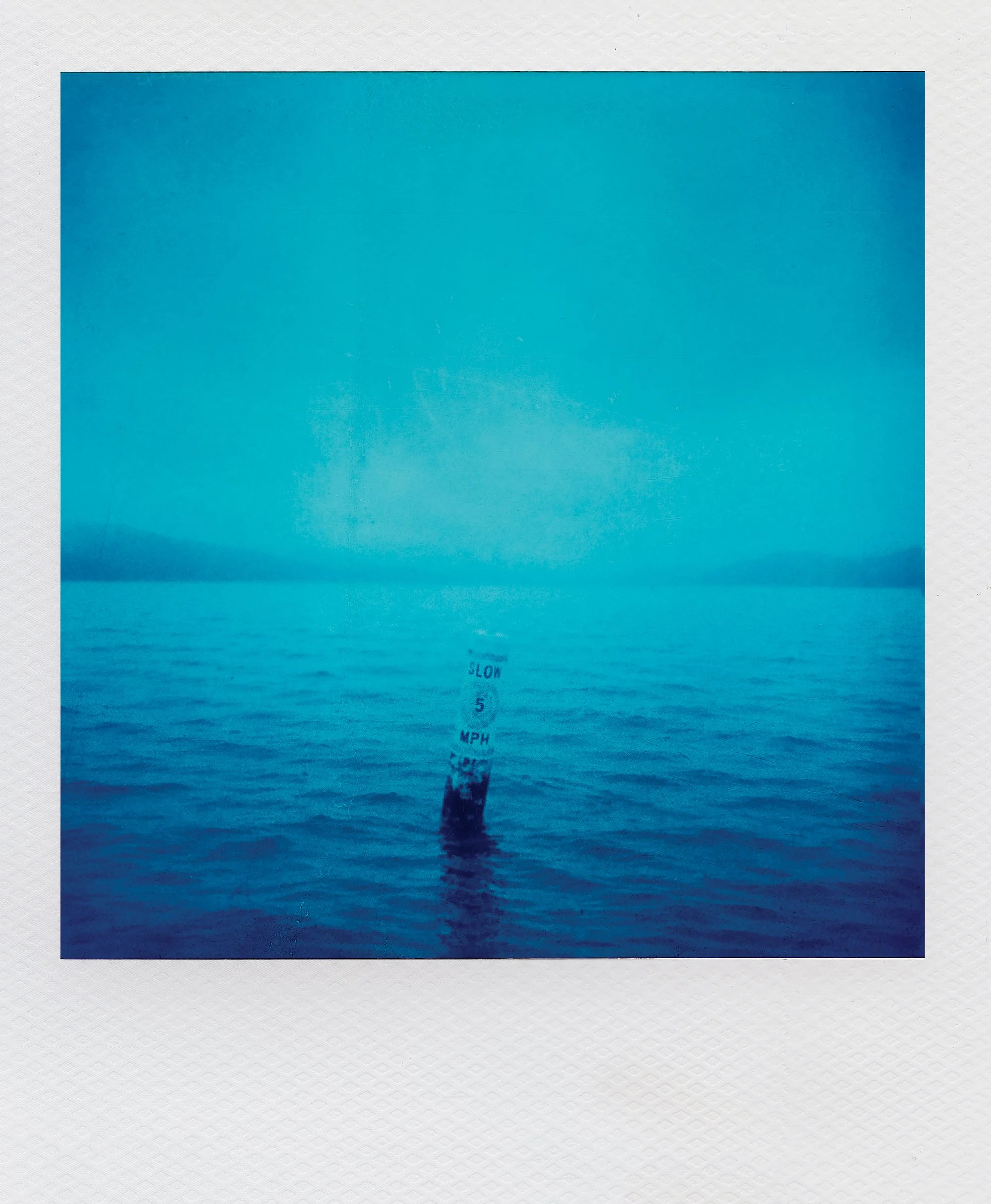
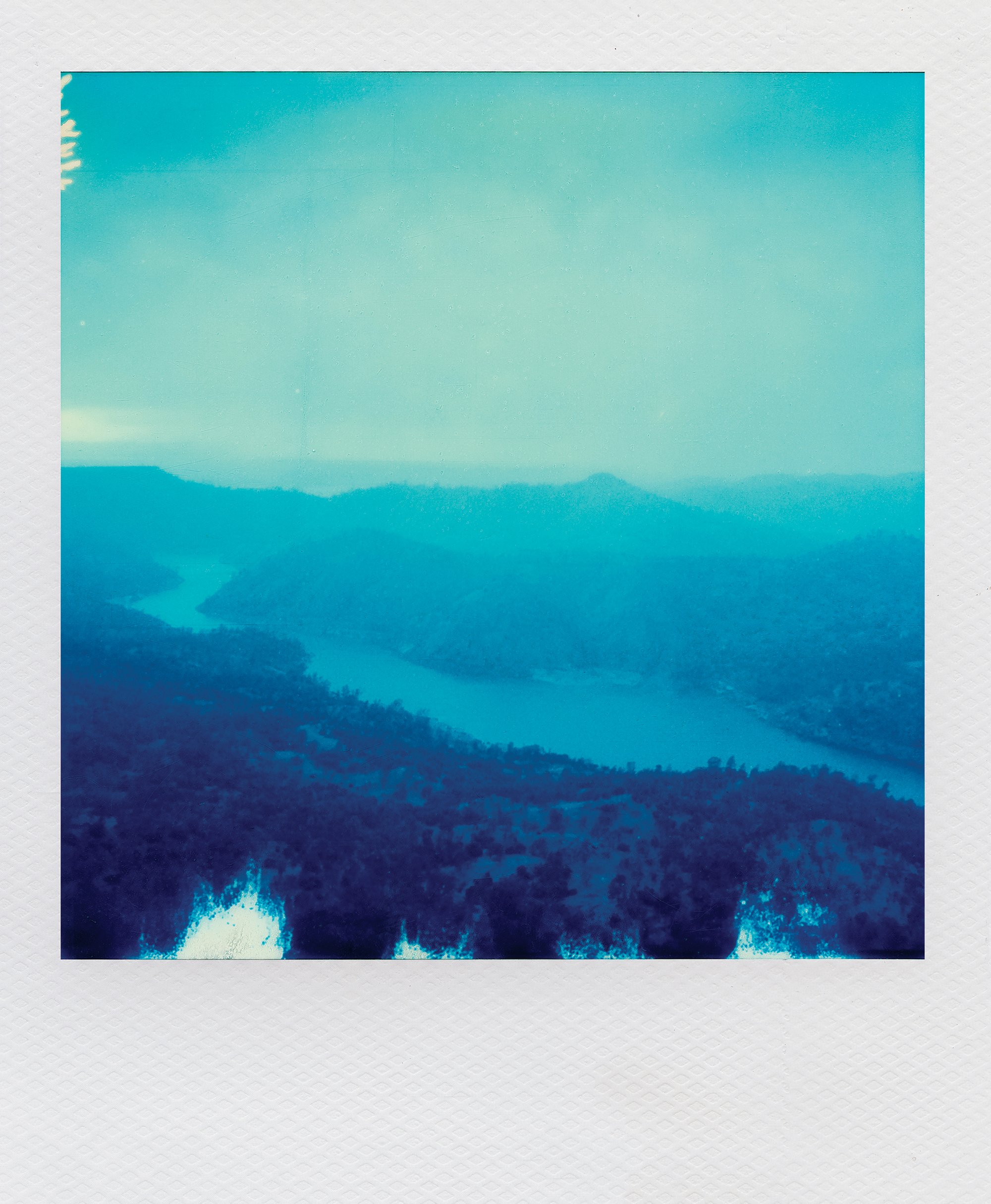
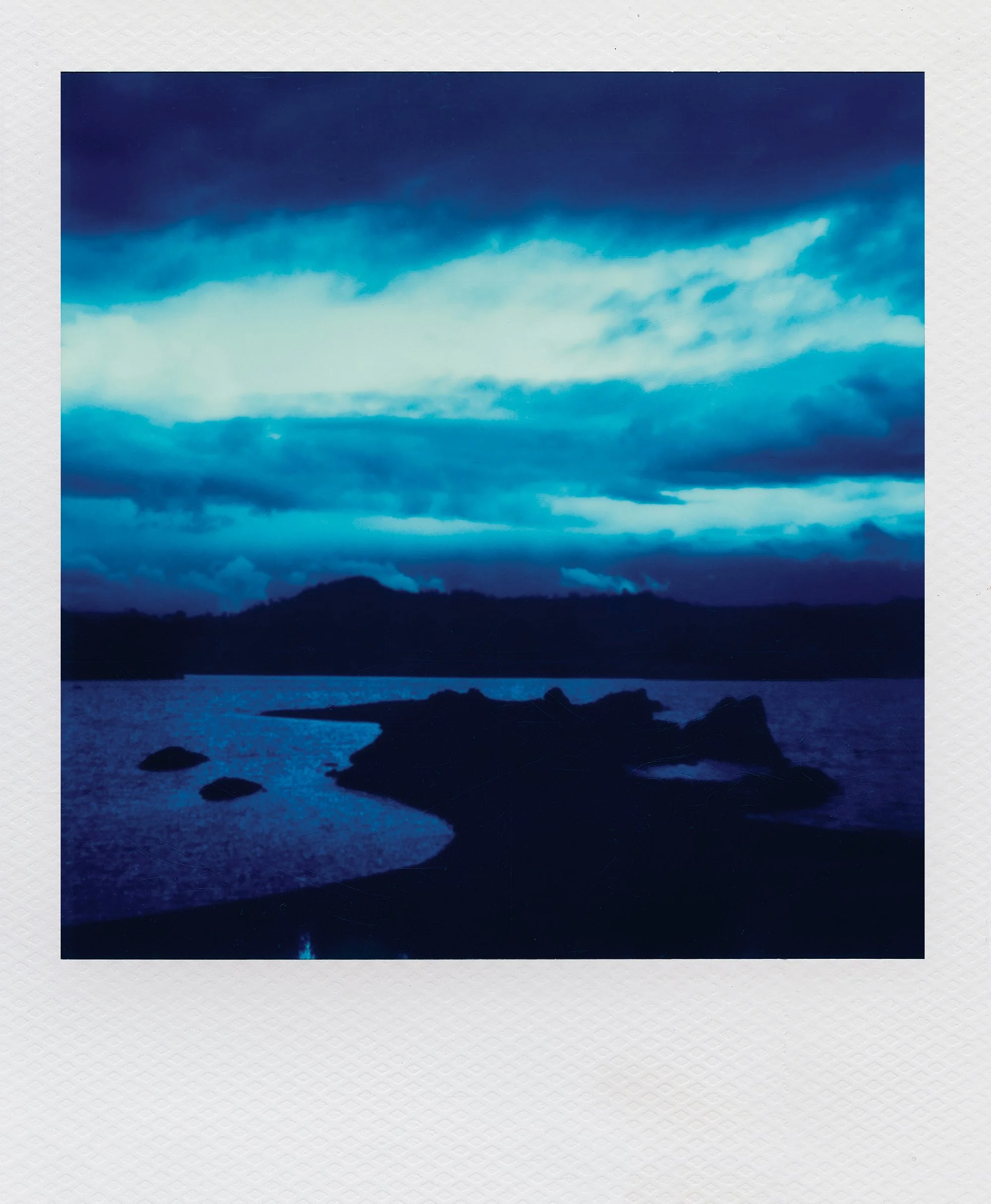
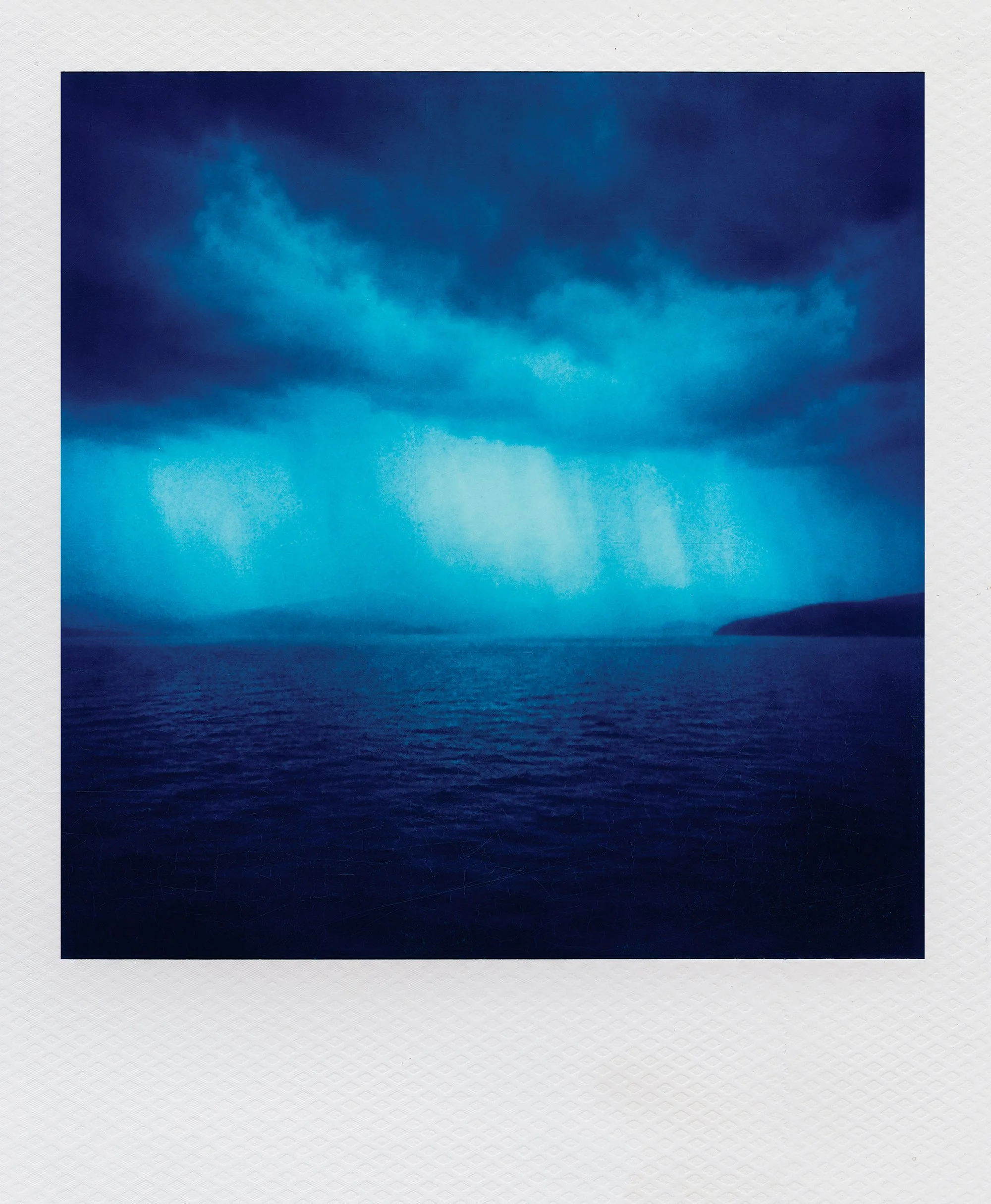
All of the photographs were made during storms, when the reservoir is at its most unstable and least legible. Wind moves across the surface of the water, rain compresses the foothills into the atmosphere, and the horizon begins to dissolve. Under these conditions, the reservoir resists the conventions of Western landscape photography — clarity, distance, and mastery — and instead becomes a shifting field of tone and reflection where water, sky, and land continually fold into one another.
These conditions exist within a longer temporal rhythm that shapes the reservoir over time. Between years of abundance and years of drought, the lake expands and recedes in cycles. Shorelines advance and withdraw, continually redrawing themselves against the foothills. What appears fixed is, in fact, provisional: a landscape shaped as much by variability as by control, defined through accumulation and absence.
The work is made using Polaroid Reclaimed Blue, a monochromatic instant film produced by Polaroid as a limited experimental batch from salvaged production materials. The emulsion was never intended to exist as a permanent stock and renders the landscape almost entirely in shades of blue, stripping away the descriptive colour that typically anchors an image to a specific time and place while echoing early photographic experiments with light-sensitive chemistry.
What remains is a landscape that resists being fixed in time. The reservoir holds not only water, but a set of conditions that shift between visibility and obscurity, stability and change, control and uncertainty. In these images, the act of looking becomes provisional, shaped by the same forces that continue to alter the land itself.
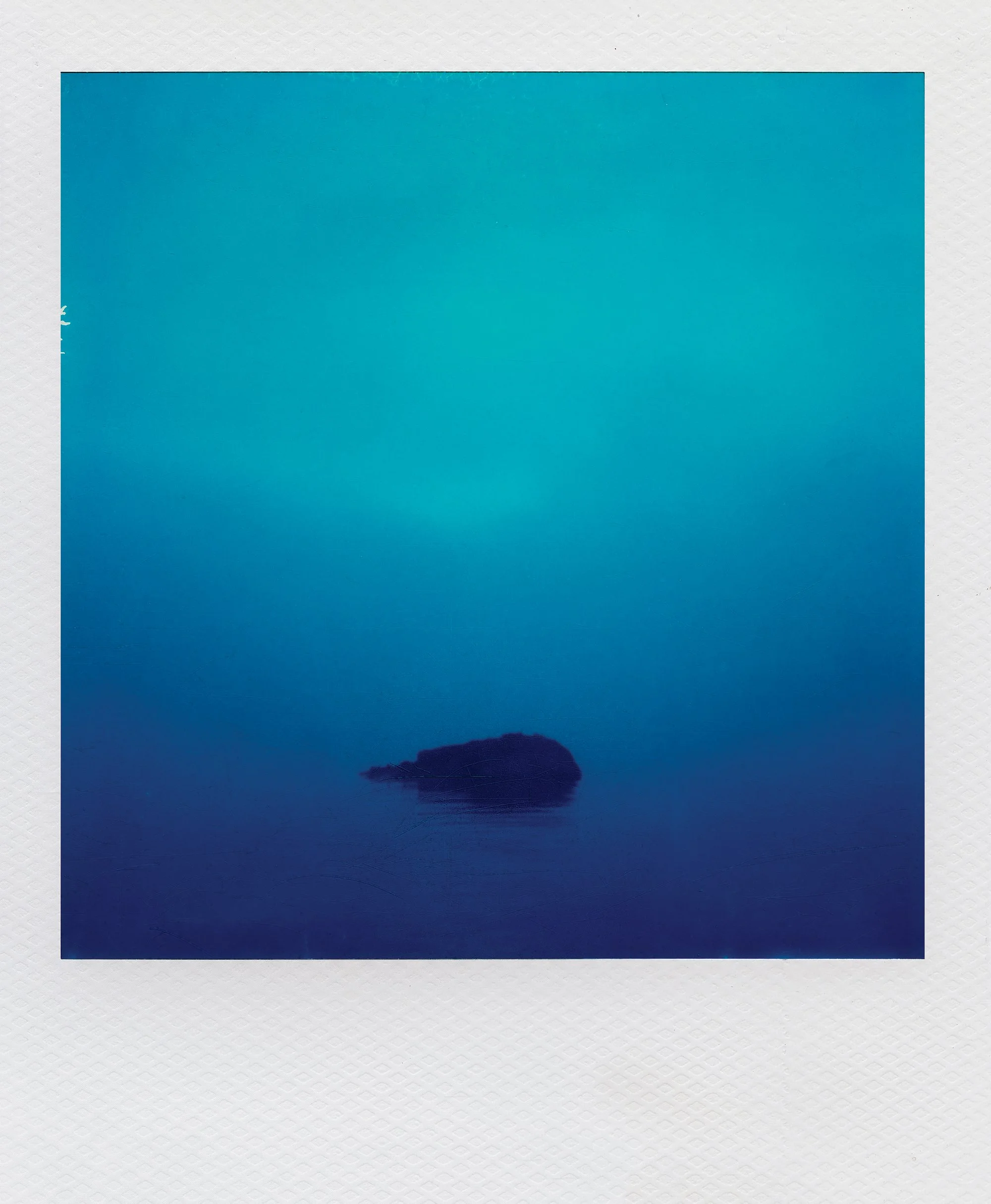
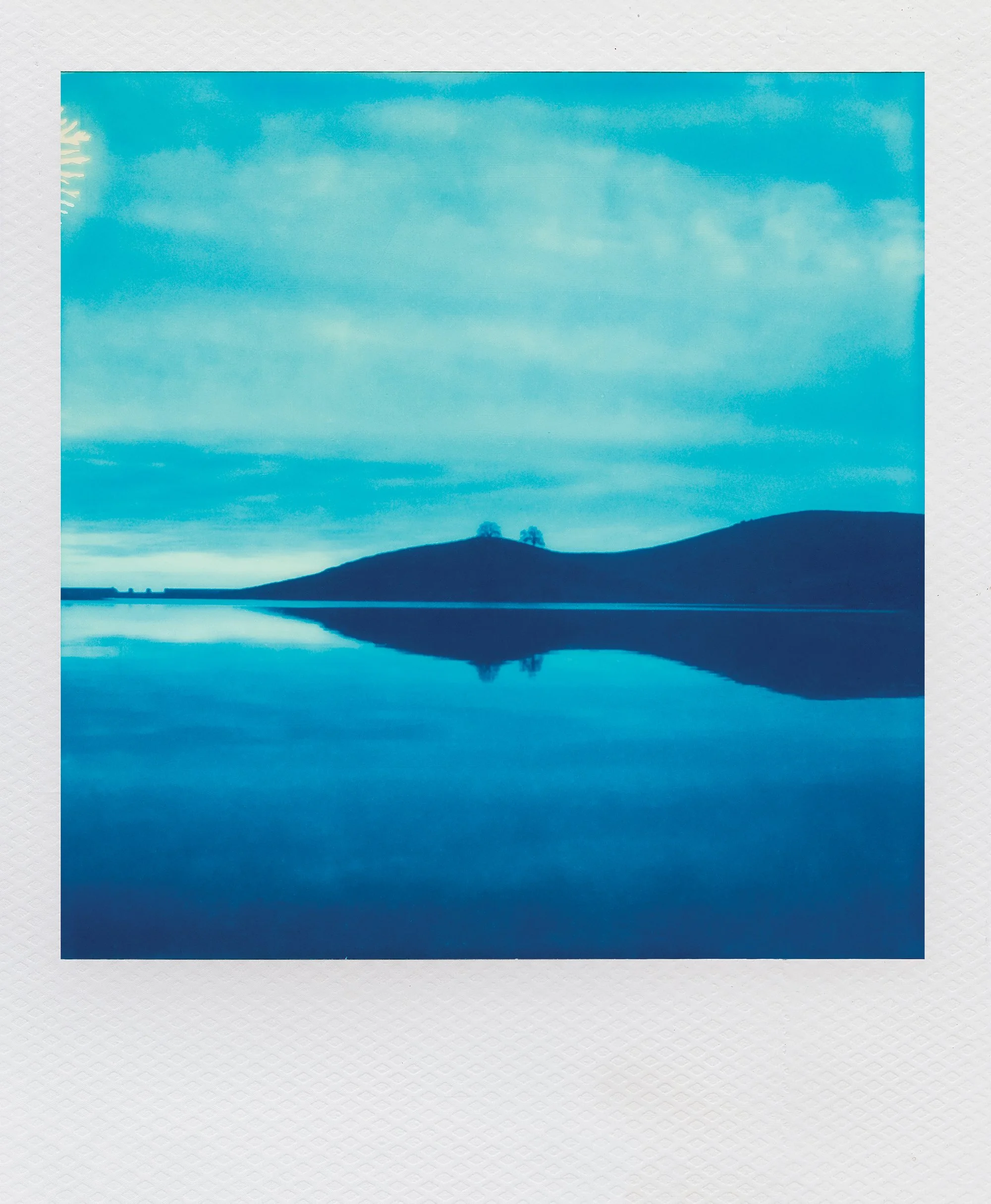
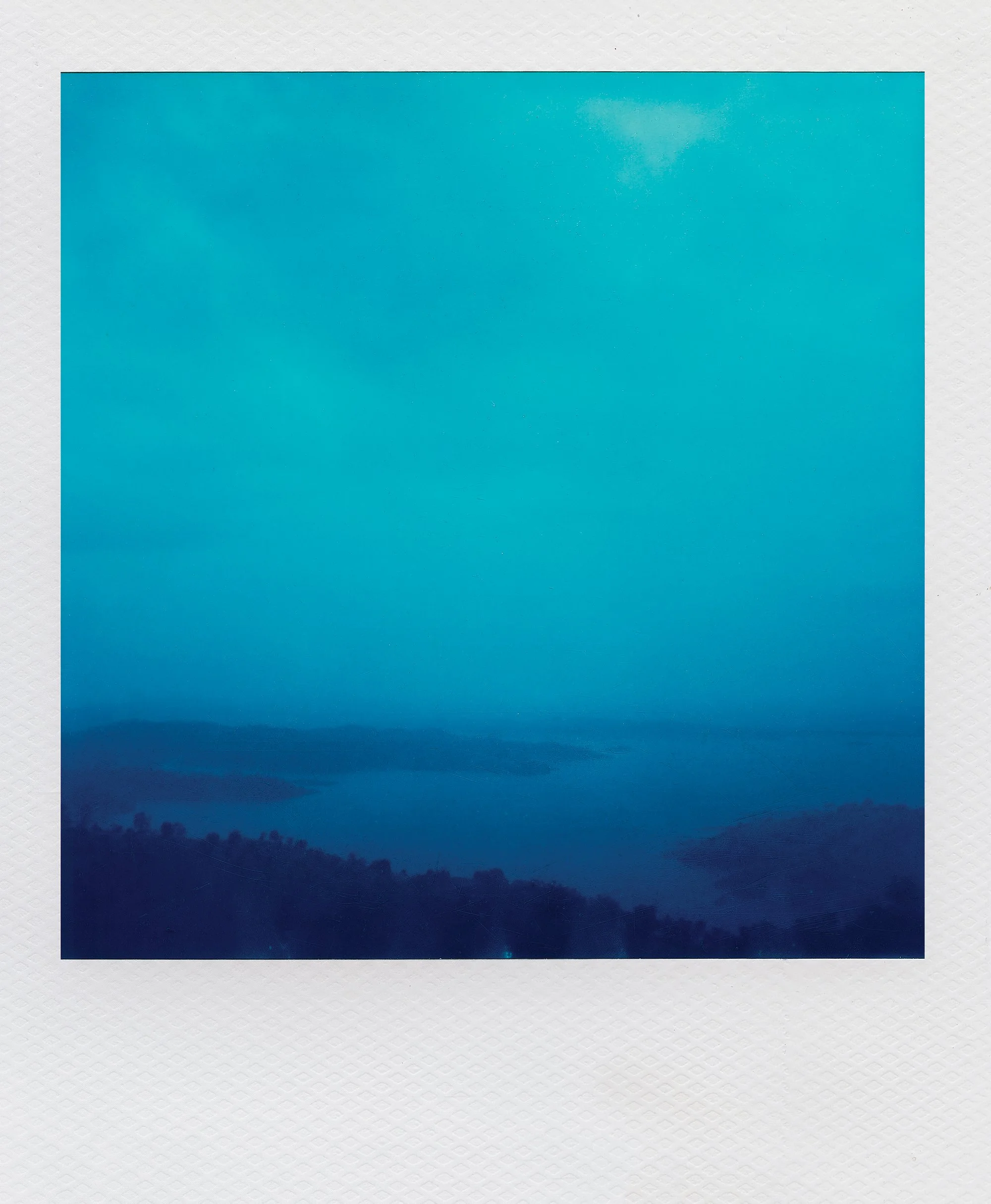
All of the photographs were made during storms, when the reservoir is at its most unstable and least legible.
The work is made using Polaroid Reclaimed Blue, a monochromatic instant film produced by Polaroid as a limited experimental batch from salvaged production materials.
About Michael
Michael Behlen is a photographer, curator, and publisher whose practice explores perception, temporality, and presence through analog photographic processes, particularly Polaroid instant film. Rooted in metaphysical and phenomenological inquiry, his work approaches photography as a contemplative discipline centered on stillness, uncertainty, memory, and material transformation.
Behlen’s practice is deeply tied to the physical limitations and unpredictability of instant film. Chemical drift, surface imperfections, and unstable emulsions are embraced as essential components of the image, reflecting broader themes of impermanence, fragility, and the passage of time. His work often focuses on the environmental and psychological landscapes of California’s Central Valley and Sierra Nevada regions.
To see more of his work, visit his website or follow him on Instagram
READ NEXT