Molly Mogul – Hopes, Dreams & Other Embarrassing Things
Molly Mogul didn't choose music, music chose her, via an administrative error. From choir practice in Bavaria to recording in a van, from co-founding a queer arts collective to releasing her debut on Hey Boy, she's built something rare: a sound that earns its tenderness.
Interview JC Verona Photography Philip Blythman Make up Claudine Blythman Hair Guido Ferranti 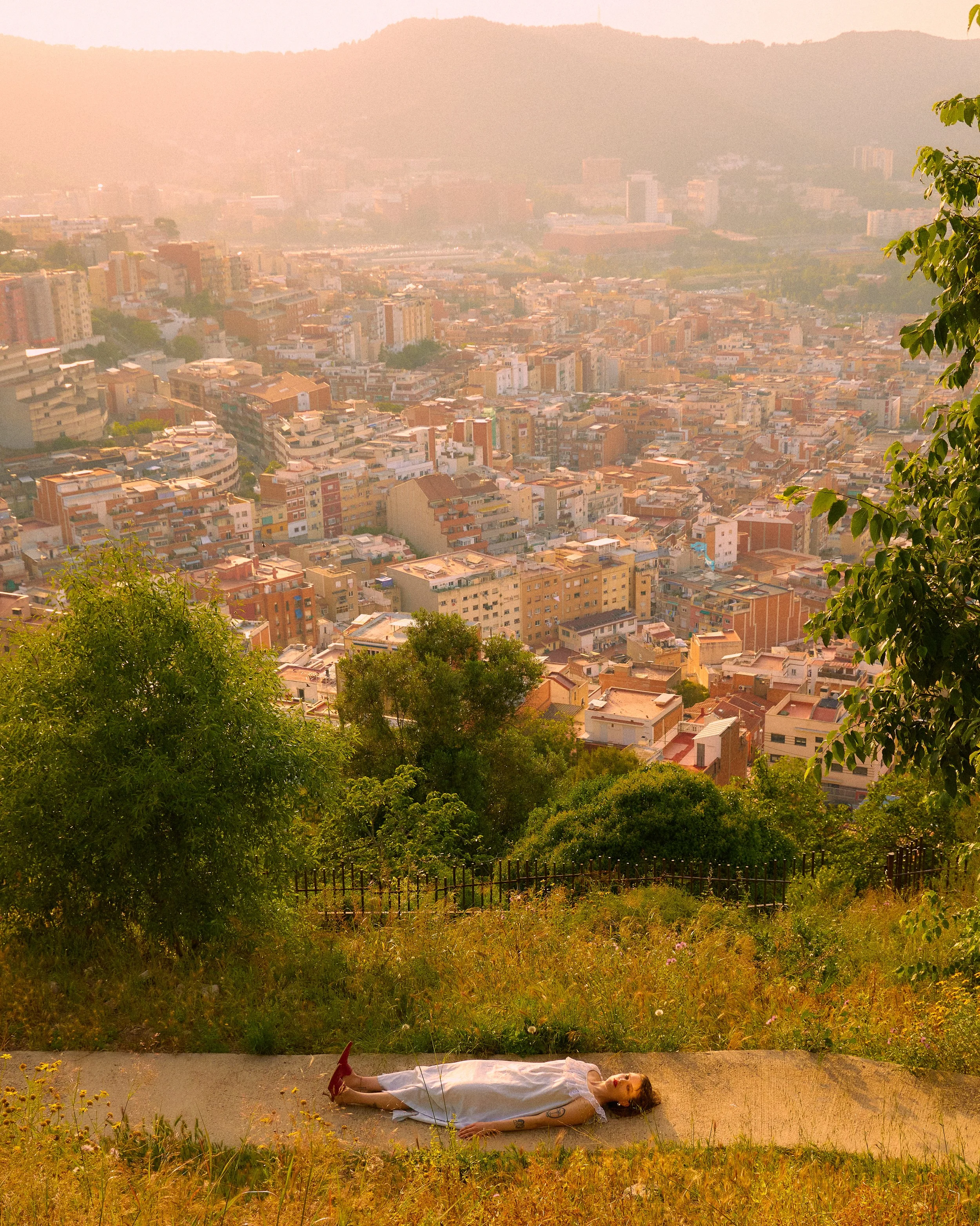
Let’s start from the beginning. Your dad accidentally enrolled you in choir. A lot of artists trace their origins back to some decisive, self-chosen moment. Yours is almost the opposite. Does it make you think differently about what it means to find your voice?
It’s kind of hard to say, because I don’t know what it would’ve been like if that hadn’t happened. I also don’t really remember what I was like musically before then. But I can definitely say that being made to sing with a big group of people all through my teens was really formative. We had to do solos in front of the whole class, and I remember that being terrifying in the beginning. But after doing that regularly for four or five years, you do start to find a bit more confidence in your voice. I think that can really help at that age. So maybe it did shape my approach in a different way. It wasn’t really this conscious, decisive thing. I more or less ended up in that musical environment and slowly grew into it. And I think it taught me early on that music can be a very communal thing — that finding your voice doesn’t always happen by yourself.
You've lived in Inning am Ammersee, Bristol, Barcelona, Munich, Paris and you recorded your debut in a van somewhere in between all of that. Is nomadism a creative strategy for you, or is it more something you've had to learn to make work for you?
I guess in some way it maybe is a subconscious creative strategy. So far, my experience has been that I get quite stuck if I’m in one place for too long. Towards the end of my years in Bristol I really felt this kind of deflatedness from being in the same place — like there wasn’t enough newness coming in anymore. Going somewhere else sort of kicks up the dust. It gives you new experiences to process, new people, new perspectives, new things to go through. And of course it’s a huge privilege to be able to live like that — to move to different countries and meet so many different people with completely different ways of seeing things. At the moment I feel like I’m constantly widening my catalogue of experiences. Looking back at the last few years, so much has happened that creativity almost comes up naturally from it. But it’s definitely also a form of escapism. At some point it would probably be good for me to stay in one place and face myself a bit more. I’d like to see what could come out of that.
The album was produced at Ciel Rouge in Paris, a room that's been used by Brodinski, Charlotte Gainsbourg, Christine and the Queens. Does the history of a studio matter to you? Do you feel that energy, or is that a romantic idea you don't actually buy into?
For me the energy of a studio comes more from who and how it is run. It obviously is inspiring working in a place where artists you look up to have created before but that only works if the people you work with also have have the right energy. For me thankfully that was the case, I think Yann and Jimmy run Ciel Rouge with a really sweet atmosphere and it’s super easy to feel welcome there. Making the album with Yann was - how we’d say in German Arsch auf Eimer, our work together just flowed easily. We have an overlap in taste and style that worked well for this process of this album.
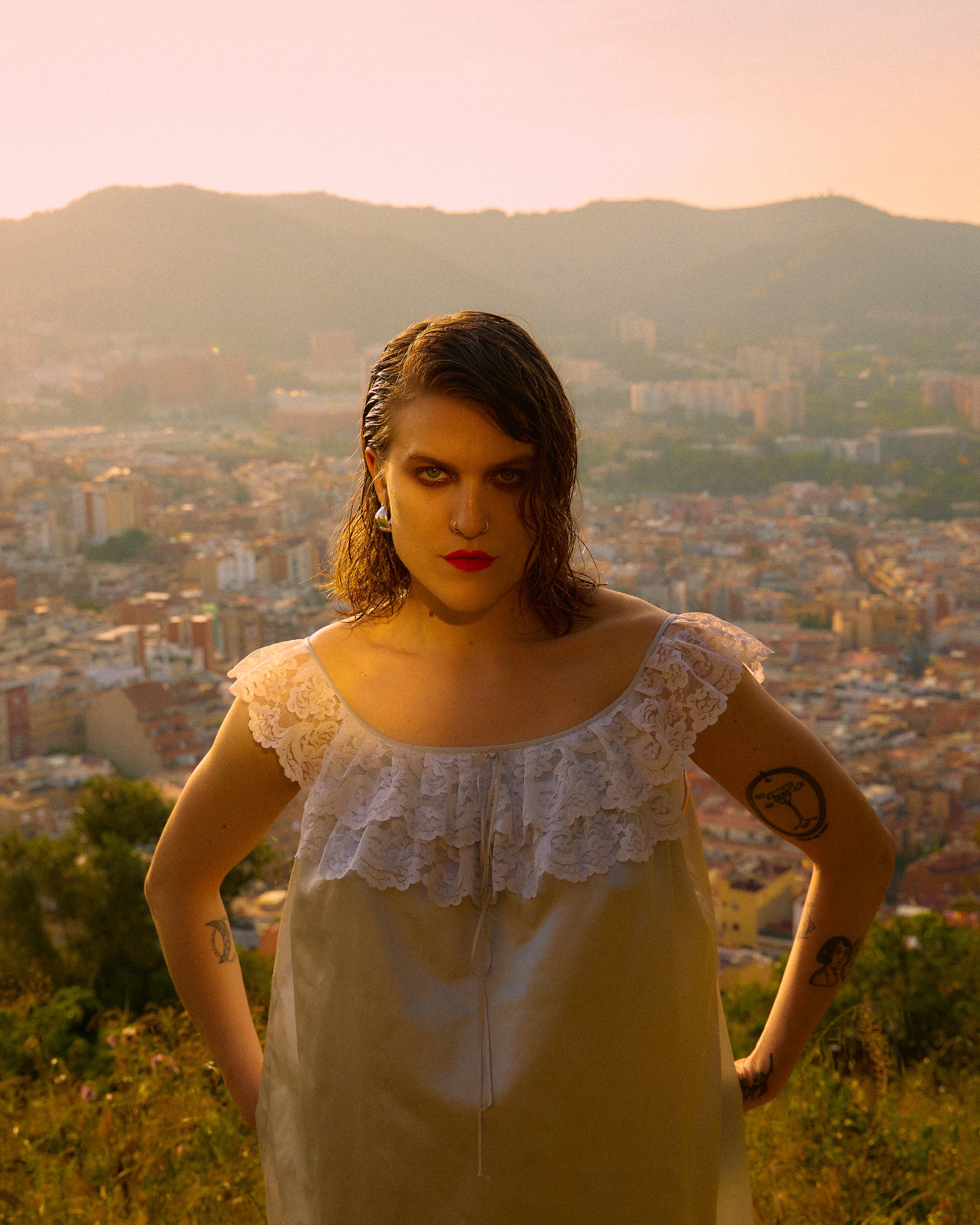
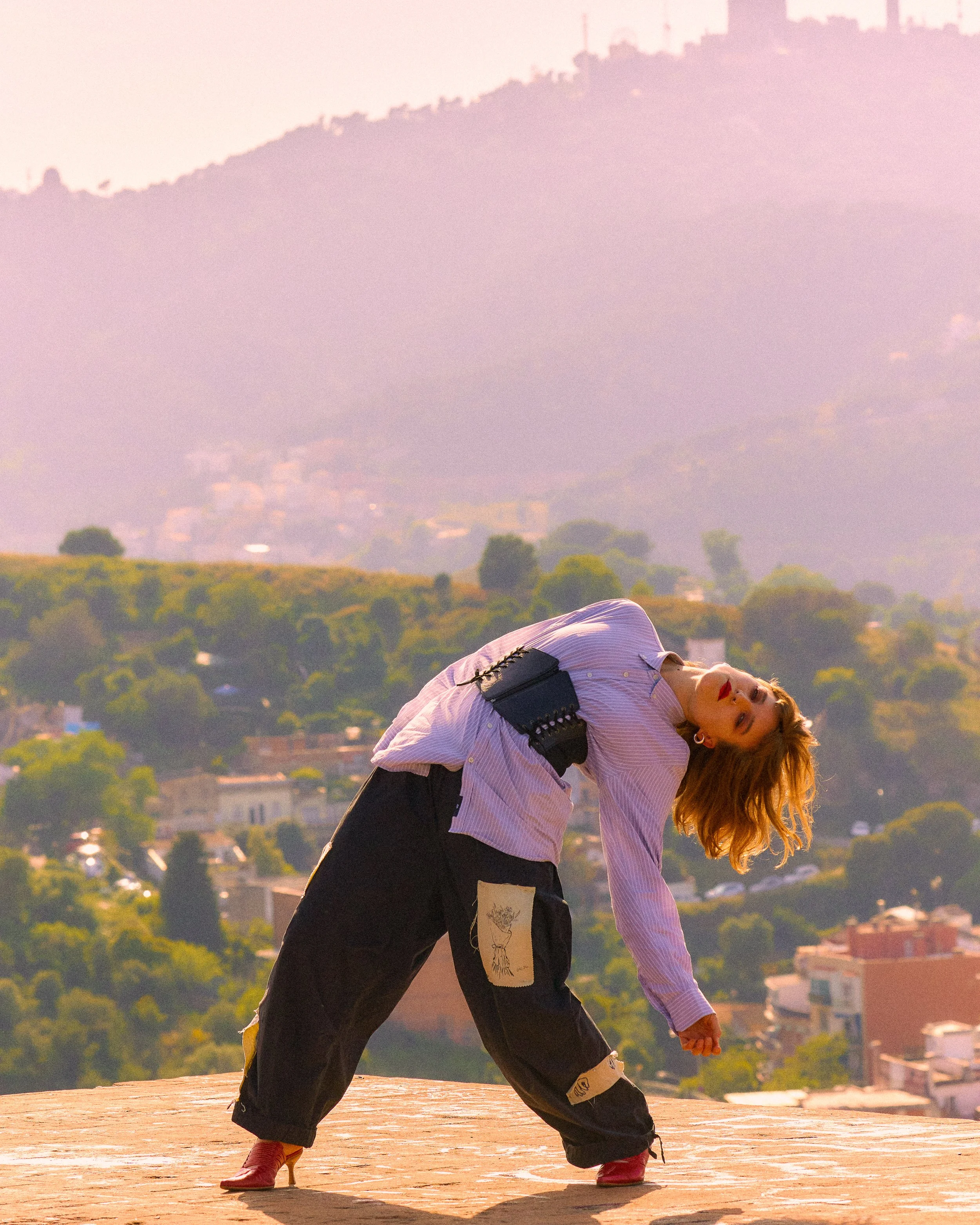
"You can be soft and still have desire. You can make gentle or vulnerable music and still want to fuck."
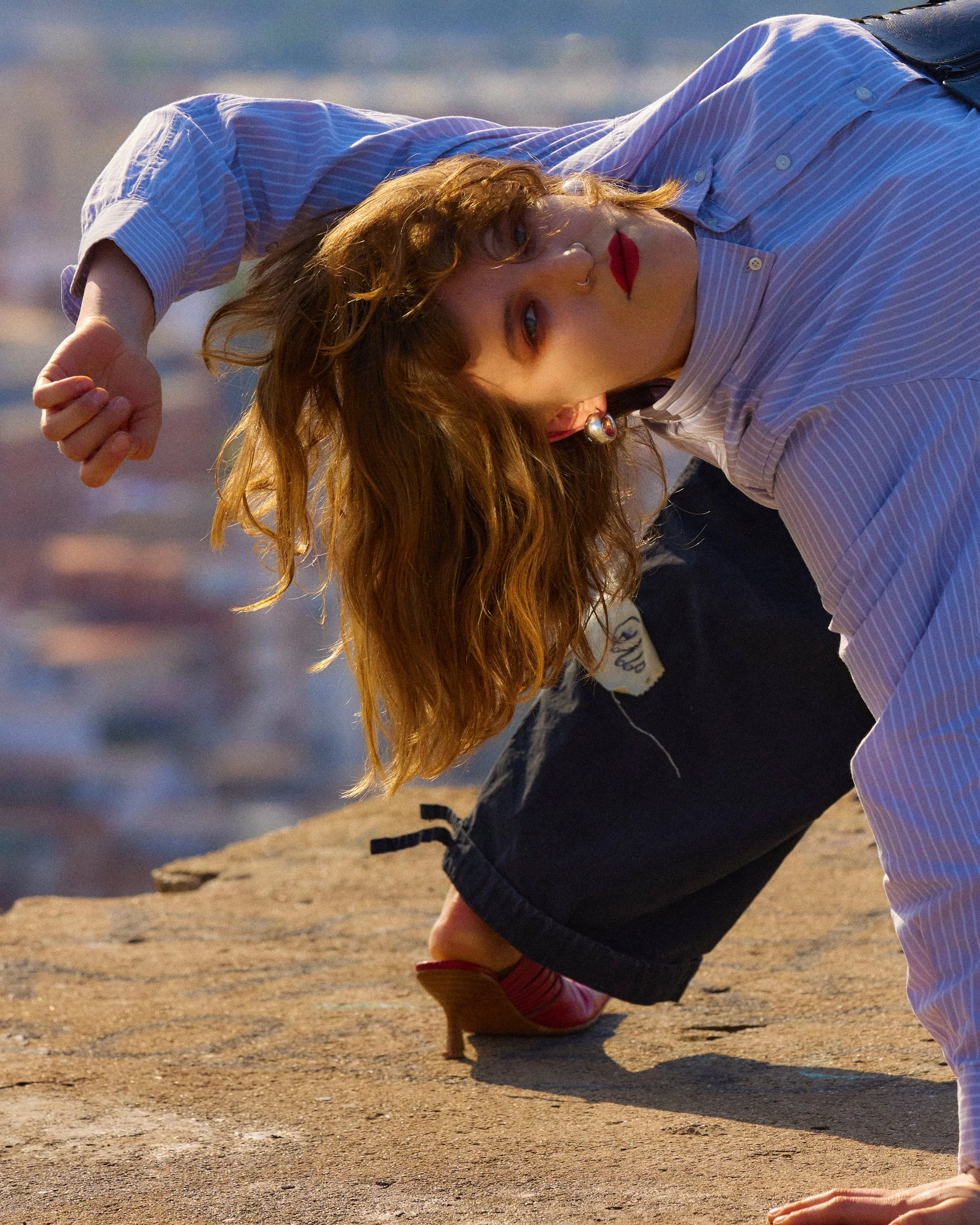
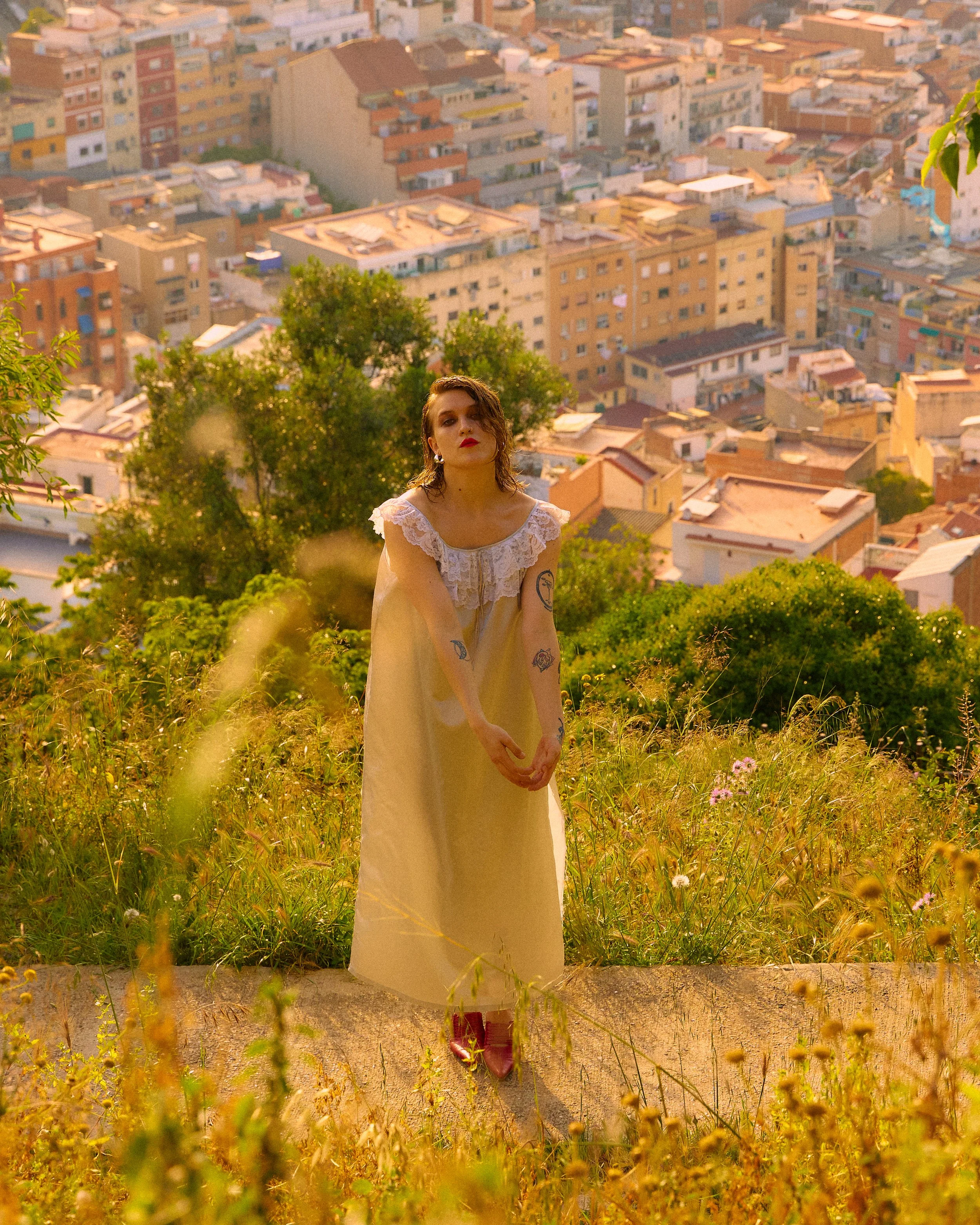
Musikexpress described the record as "trip-hop experimental pop that slinks along sexily at the cutting edge of the moment”, and they specifically called out Touch Me for its directness. There's something almost confrontational about writing so explicitly about desire. Was that a deliberate choice to go there, or did those songs just arrive that way? Is it that explicit?
I’m not sure I fully agree with that. Maybe it’s also a question of genre and gender perspective, but I do wonder if a male rapper would be asked about directness in the same way. I’d say it was half and half. The song came from something quite situational, but expressing my own feelings and desires openly is also a choice. I do think it’s important for women to be able to express sexual desire in music. I don’t really want to live in a world where only men get to talk about fucking in songs. So in that sense, yes, maybe it is a feminist choice — especially in genres where that kind of explicitness is less expected. In Germany, there’s a few female artist like Ikkimel who is really laying the groundwork for women talking about these things more openly in the rap scene. But I think it’s also important in this more art-pop or alternative context. You can be soft and still have desire. You can make gentle or vulnerable music and still want to fuck basically.
You write in both English and German, and the review noted you're more explicit in English, that the directness gets filtered when you switch to German. Is language doing something emotional for you, almost like a key change? What can you say in one that you can't quite say in the other?
In English I just have to think more. I’m not sure if that makes me more direct, but I definitely have to make more conscious choices about what I want to say and how I want to say it. In German, it just flows out of me more naturally, which maybe also makes things more vague or symbolic sometimes. There’s also something Oklou said in an interview that really stayed with me — about the emotional distance you can have with a language that isn’t your mother tongue. I really relate to that. There are things that would sound embarrassing to me in German, but somehow sound great in English. And then there are also these small feelings or atmospheres that feel much more real to me in German. So it really depends on what I’m trying to say, how I feel about the line, and whether it’s important to me in that moment that the audience understands the words directly. Sometimes the sound or emotion of the language is enough, and sometimes understanding the exact words makes everything make sense. That’s something I find really fascinating in Rosalía’s LUX. There are moments where I don’t know what’s going on lyrically, but the emotion still comes across. And then in moments where I do understand the language, let’s say for example in “La Yugular”, the words suddenly become even SO heavy. I like that dynamic — playing with when language opens something up and when it creates a bit of distance.
Dirty Spread Collective, a queer and FLINTA-led platform for experimental music and performance. What does it actually mean to build infrastructure rather than just make work? And what did co-founding that teach you that making solo music doesn't?
Woah, it taught me so much — about self-management, time management, working with other people, collaboration, all of it. And as I mentioned earlier with choir, I think this is something that has come up for me again and again: community is key. Building infrastructure means not just making your own work, but helping create the conditions where other people’s work can exist too. It’s booking spaces, organising events, figuring out money, communication, responsibilities, care — all the things around the art that make the art possible. And doing that with Dirty Spread taught me a lot that solo music doesn’t necessarily teach you. Whether it’s visual art, filmmaking, music or performance, you need other people. No one’s an island. I mean I can only speak for myself, but I definitely know that I’m not one. I love working with other people, having discussions about the process, trying to figure out the best solutions — creatively, but also organisationally. Putting on events with a group of like-minded people (and without cis men) was also really interesting in terms of non-hierarchical structures and group dynamics. It taught me a lot about how different a creative space can feel when people are really listening to each other and building something together.
Bristol gave you Loyle Carner, Little Simz, Lava La Rue, Biig Piig, a very specific lineage of artists who all seem to carry their cities in their work. You came to it as an outsider. What did being an outsider in that scene give you that belonging might have taken away?
It’s funny, because none of those artists really carry Bristol specifically either. I discovered Loyle Carner through Yesterday’s Gone way before I moved there. Then when I came to the UK, I took a deep dive into that kind of lo-fi hip-hop sound, which looking back felt very specific to those years.It took me a while to really find my footing in the local Bristol scene. Getting to know artists like Grove, Sarahsson or BIPED kind of beamed me into a completely different musical sphere, and that changed my taste and style a lot. I think not fully belonging somewhere can sometimes give you more freedom in how you engage with a scene. I’m not really representing any place, which can be quite freeing. There are a lot of Berlin rappers I listen to who mention the city so much that I sometimes think, they’d be fucked if they ever left. Obviously that can be powerful too, but for me I think there’s more Spielraum to try things out and be independent in your art when you’re not tied so strongly to one specific city. On the other hand, having that stability and really knowing your community can give you a very strong sense of belonging, and probably a much more direct connection to your audience. So I don’t think one is necessarily better than the other. Being an outsider gave me freedom, but belonging probably gives you a different kind of depth.
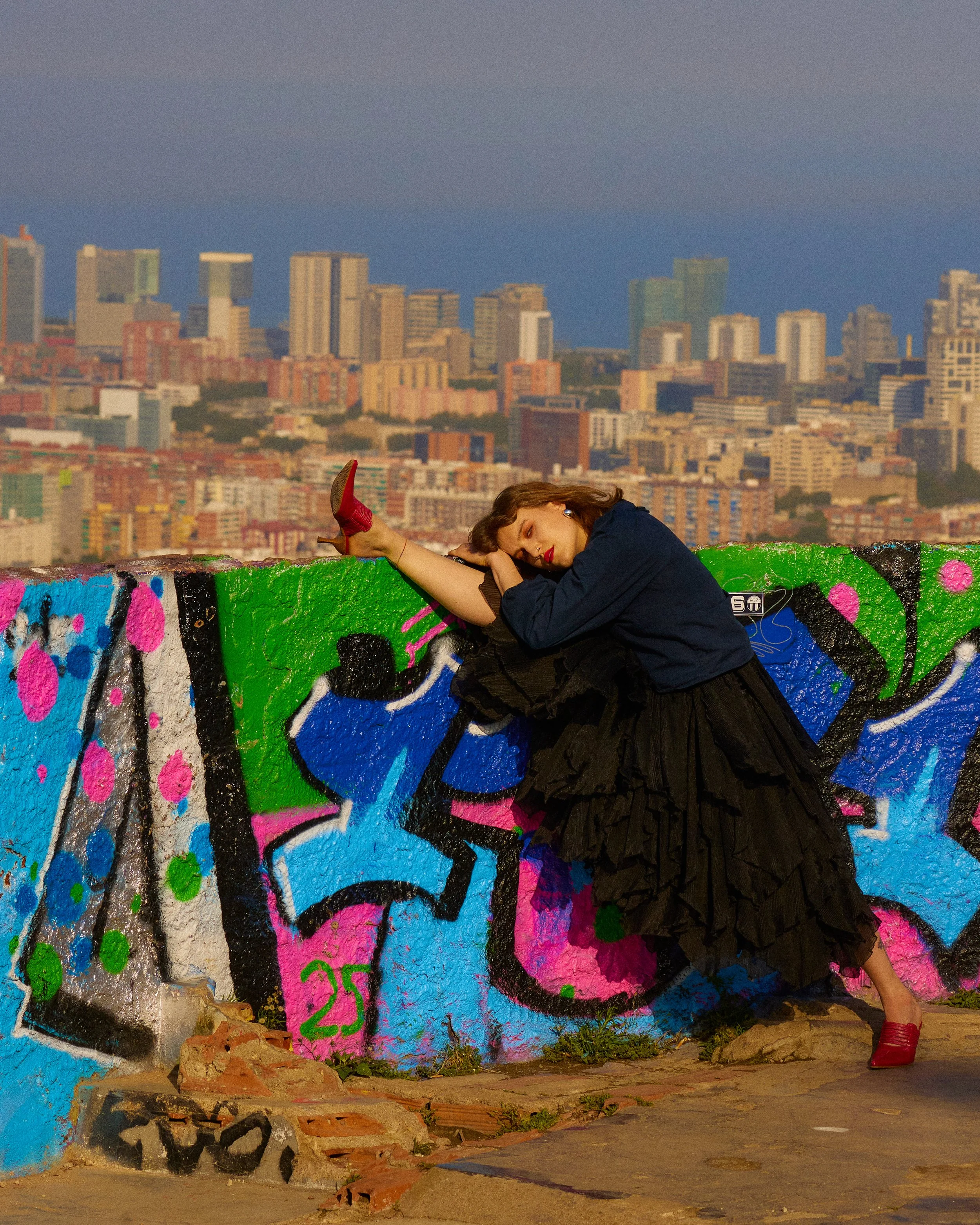
“Dancing and singing at the same time is HARD.”

You completed a Master's in Creative Performance Practice focused on musical theatre and contemporary dance. That's a very different kind of training than most people imagine when they hear "experimental pop artist”. How has thinking about the body, about movement, changed how you write or perform a song?
I think about the body a lot, in a visual sense as well as in a poetic sense. But I think there’s also a layer of understanding emotions and processing them that changes a lot when you have a higher sensibility to your physical sensations. There are a lot of feelings that hide in little nooks and crannies of the body. I think since becoming more aware of those, there’s also a different accessibility to how I write my songs. I just know better what I feel, and therefore I know better how to express it.
In some sort of way, the abstract becomes more reachable. But my music is the product of a mix of everything I’ve done — visual art, the theatre aspect, as well as dance. I think the experimental side comes more from that fine art background, whereas the understanding of the more pop or performing side of things comes more from the recent years. I love finding the overlap between both. In terms of performing live, there’s a lot that I want to discover more physically. For the album release show we did in Barcelona, I had nine super talented dancers with me on stage, who all had complete artistic freedom in their performances. That was kind of a first experiment in how to combine the body and the music, but I’d love to explore more how I can involve my own body. In that regard, I have huge respect for musical performers and the big pop stars of this world with massive live shows. Dancing and singing at the same time is HARD.
A Bouquet of Hopes and Dreams is an almost aggressively tender title. In a cultural moment that rewards irony and emotional detachment, putting the word "hopes" in your album title feels like a small act of defiance. What made you want to call it that?
For me, the whole album is about vulnerability, and I think even having a title that feels a bit kitsch in a way is a choice of vulnerability. Being vulnerable with your feelings and hopes and dreams is almost seen as embarrassing, and I think it would be nice to normalise that a bit more. We’re quite reserved with what we wish for. It’s not really cool to have dreams, or at least to say them out loud. For me, making music is one of the main ways to get these “embarrassing” vulnerabilities out of my system. I’m obviously part of this hamster wheel of not talking about feelings, so I’m kind of thinking, if I can’t do it in real life, at least I’ll do it in my songs. I’d never ever have the courage to say to someone: “I want you to stay, come lay down with me for years.” So at least I want to be able to say it in my songs. I want a space to go through my own brain catalogue of hopes and dreams.
Hey Boy's whole pitch is independence over trend-chasing, music with a point of view that doesn't ask permission. So what does that actually unlock for you as an artist? What's on this record that might not exist if you'd gone a different route?
Artistic freedom is super important to me, and that’s definitely something I felt with Hey Boy. There was trust in the music and in the point of view, which means you don’t have to waste energy trying to make things smaller or more understandable for someone else. But to be very honest, what having a label behind me also unlocked was money. And I don’t mean that in a cynical way — I think it’s actually important to be transparent about it. Making an album properly costs money. Working with the people I worked with, spending time in the studio, having the space to really finish things — as a fully independent artist, that simply wouldn’t have been possible for me financially in the same way. So I think what it unlocked was a combination of freedom and resources. The record could become more detailed, more carefully produced, and more ambitious than it maybe would have been otherwise. Not because someone came in and changed the vision, but because there was support around the vision.
READ NEXT