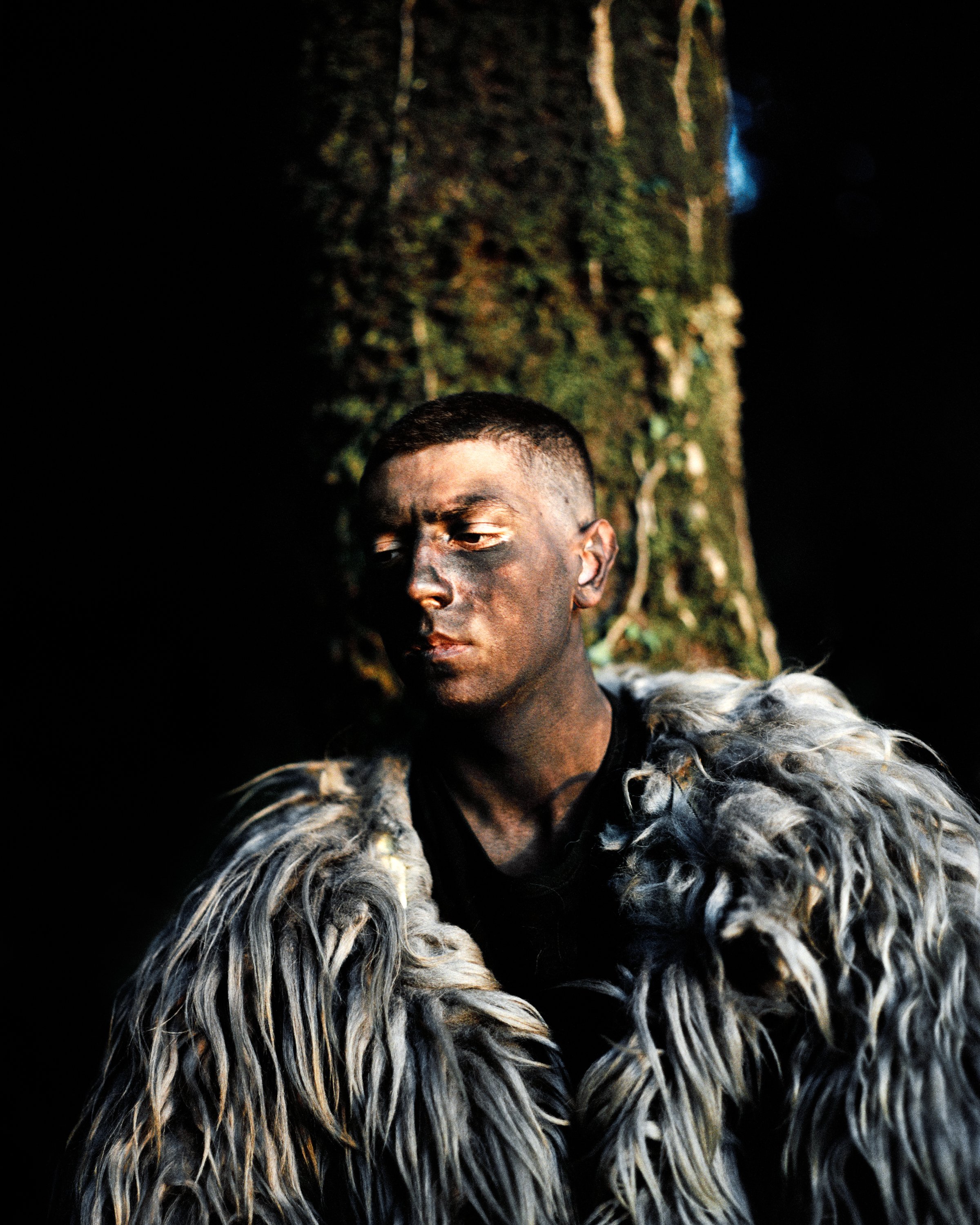
Dallas born dancer-drummer-DJ turned star producer and now performer ZACH WITNESS has established himself as one of the most in-demand music makers of the day – working with the likes of Erykah Badu, André 3000, Nile Rodgers, Doechii and upcoming sensation Infinite Coles. Now, as he releases his boldest EP to date, we talk to the multi-hyphenate juggernaut about working with his heroes, following his own path and healing the tension between his hip hop past and queer present.
Interview Adam Mattera Photography Christian Trippe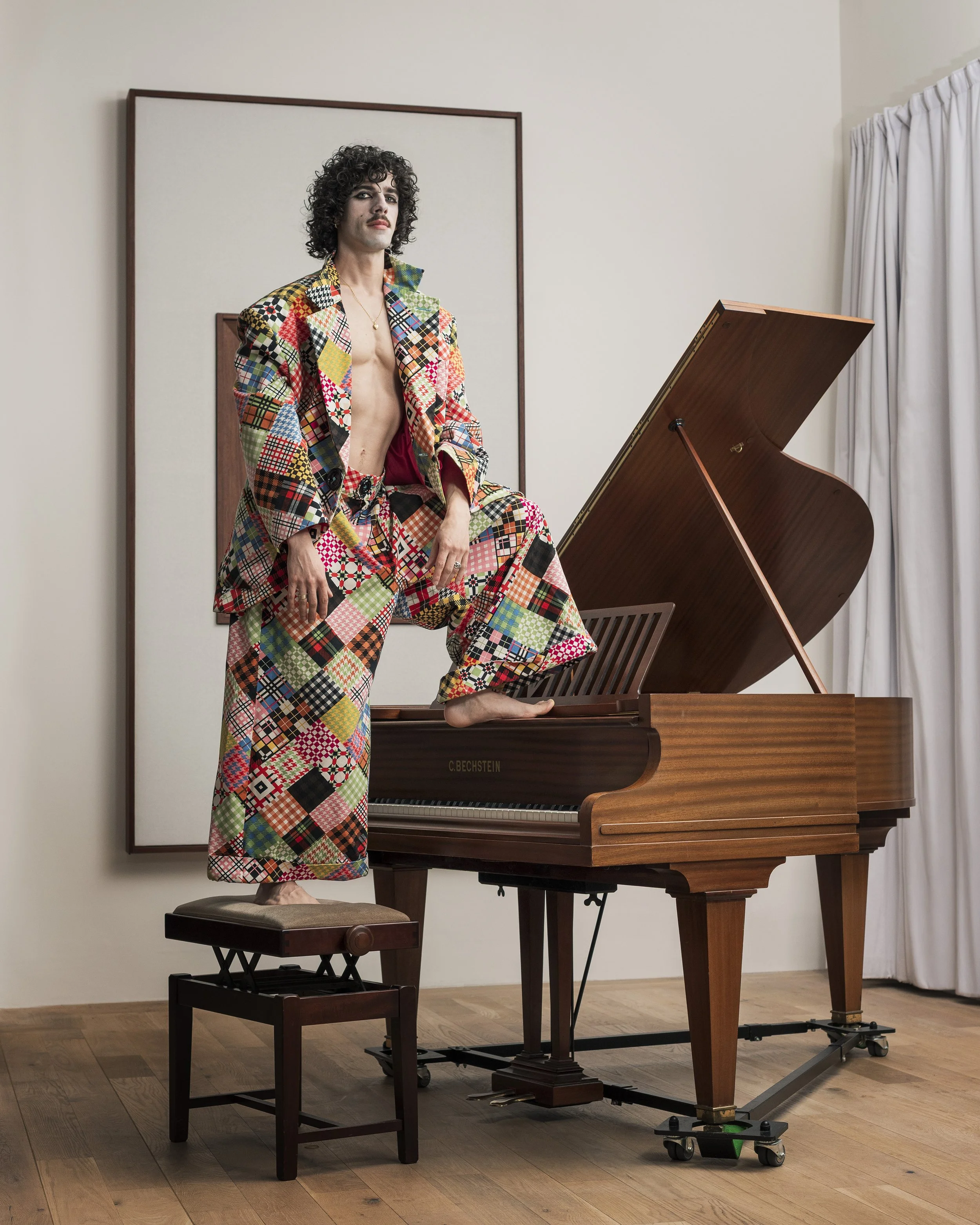
Your new track Killer Queen (a twisted cover of the Queen classic) has just dropped and it’s great. And the video is wild – probably the most daring, queerest way you’ve represented yourself to date…
Thanks – it’s actually the first time I’ve directed one of my videos. I wanted to challenge myself to see if I could do it. It’s a Mad Hatter’s Tea Party vibe, but with an East London edge to it, so I invited different friends I’ve met since I moved here, queer icons like Princess Julia and Sharon Le Grand. There's a Jekyll and Hyde element to it, where it starts out and we're all very civilized, drinking our tea, and as it progresses this crazy, feral kind of energy emerges… it speaks to the queer experience in that you grow up feeling you have to constrain yourself, and then later in life, you find that space that allows you to let your hair down and be free.
We need to talk about Freddie Mercury – the cake in the video has ‘Freddie lives’ in icing – so you make that explicit connection there – do you feel any personal connection as well?
It’s funny because throughout my life people made that comparison. Before I even really knew who Freddie was. Much later, I read this book Freddie Mercury – A Life In His Own Words, and the way he thinks about things, his process… it felt like I was reading my own thoughts. He’s like a North Star to me – he kind of embodies the greatest version of myself that I'm trying to become, but in my own way, you know?
That sort of freedom of expression that Freddie had, the lust for life?
Exactly – and then I found out that he was born the day after I was. So maybe astrologically, there's even something going on there.
“I’ve always wanted to build a bridge between straight culture and queer culture, because I've grown up between those two worlds.”
Zach Witness
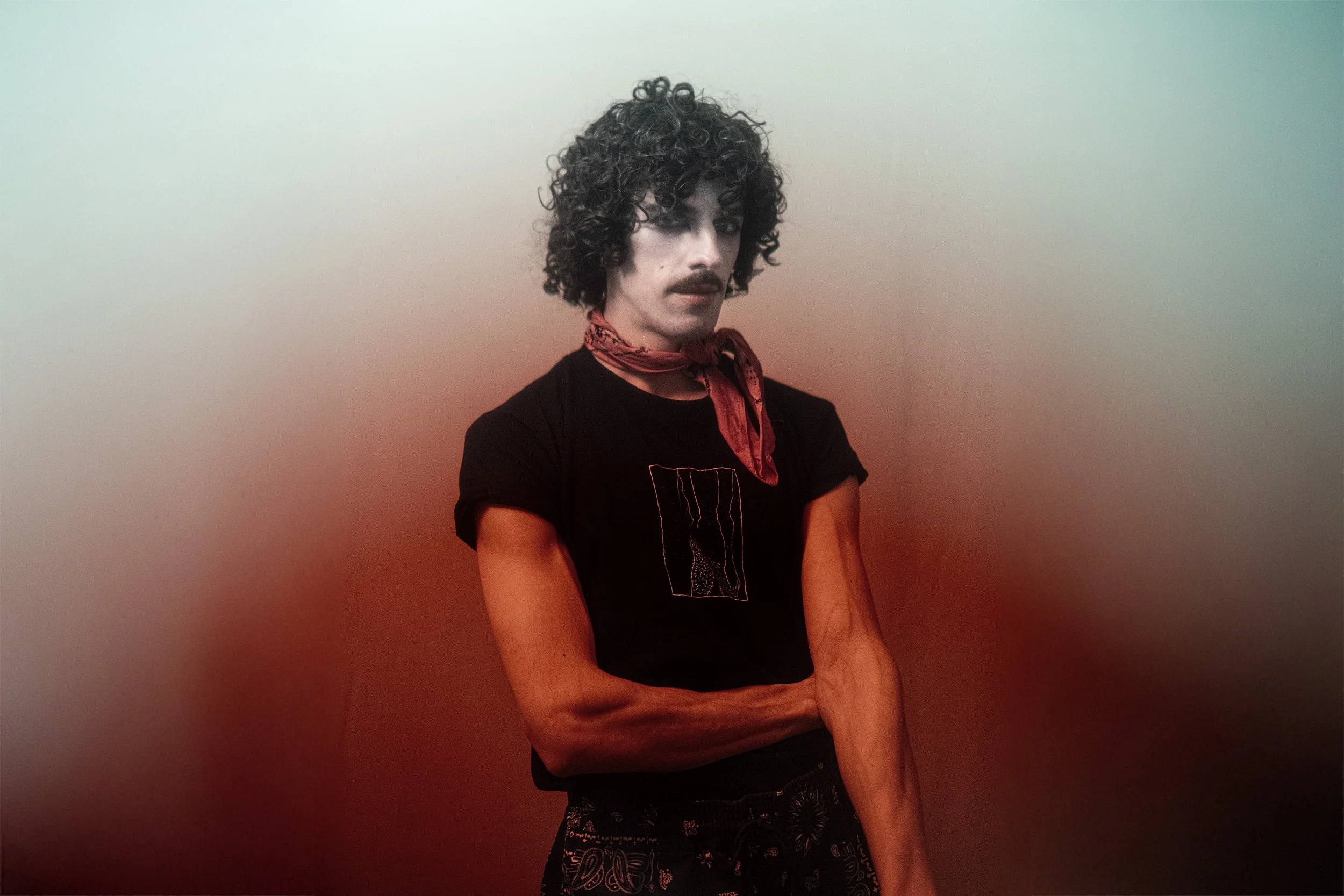
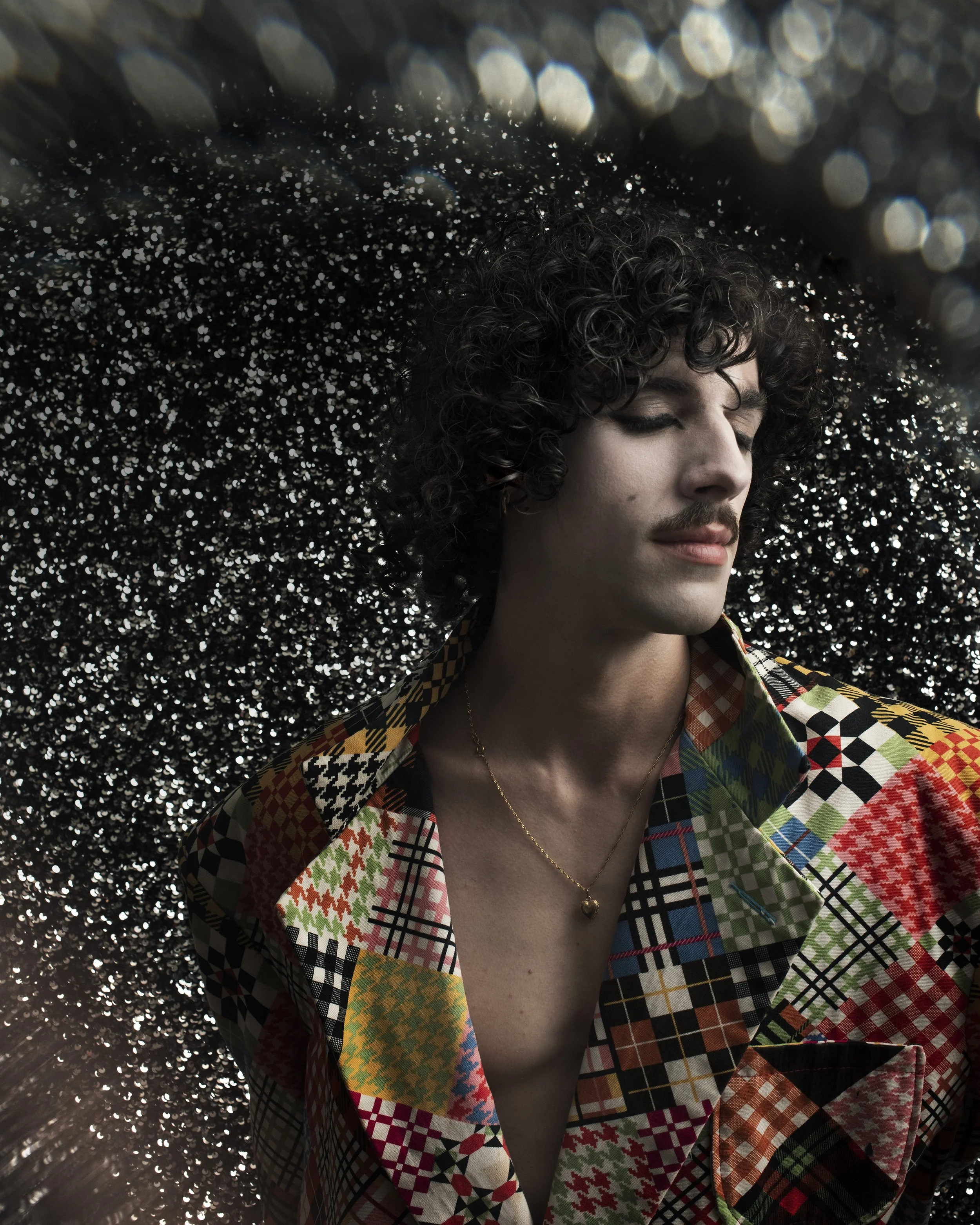
The track’s from your latest EP New Life – there’s a lot going on there: interesting production ideas, live strings, house beats – a real kaleidoscope of your styles. But what really struck me, which I think has been a theme through your work, is the acknowledgement of the roots of the music you’re drawing on, while being totally future-forward. The EP starts with a cover of ‘90s club classic Freed From Desire and ends with The Whistling Gypsy which interpolates Crystal Waters…
I’ve always made music from a place of adoration. But specifically with this EP, I wanted to create a kind of bridge between me as a producer and DJ to me as an artist, which is why I'm covering some classic dance tracks and making them my own. Especially with Gypsy Woman – that's a song I play all the time in my DJ sets. But the music that's coming next is all totally original and self-written, still paying homage, but in maybe more subtle ways.
“My mom is a librarian, and my dad was a DJ, so the whole house was books, records and dance posters. I think maybe subconsciously I was absorbing that as a kid.”
Zach Witness
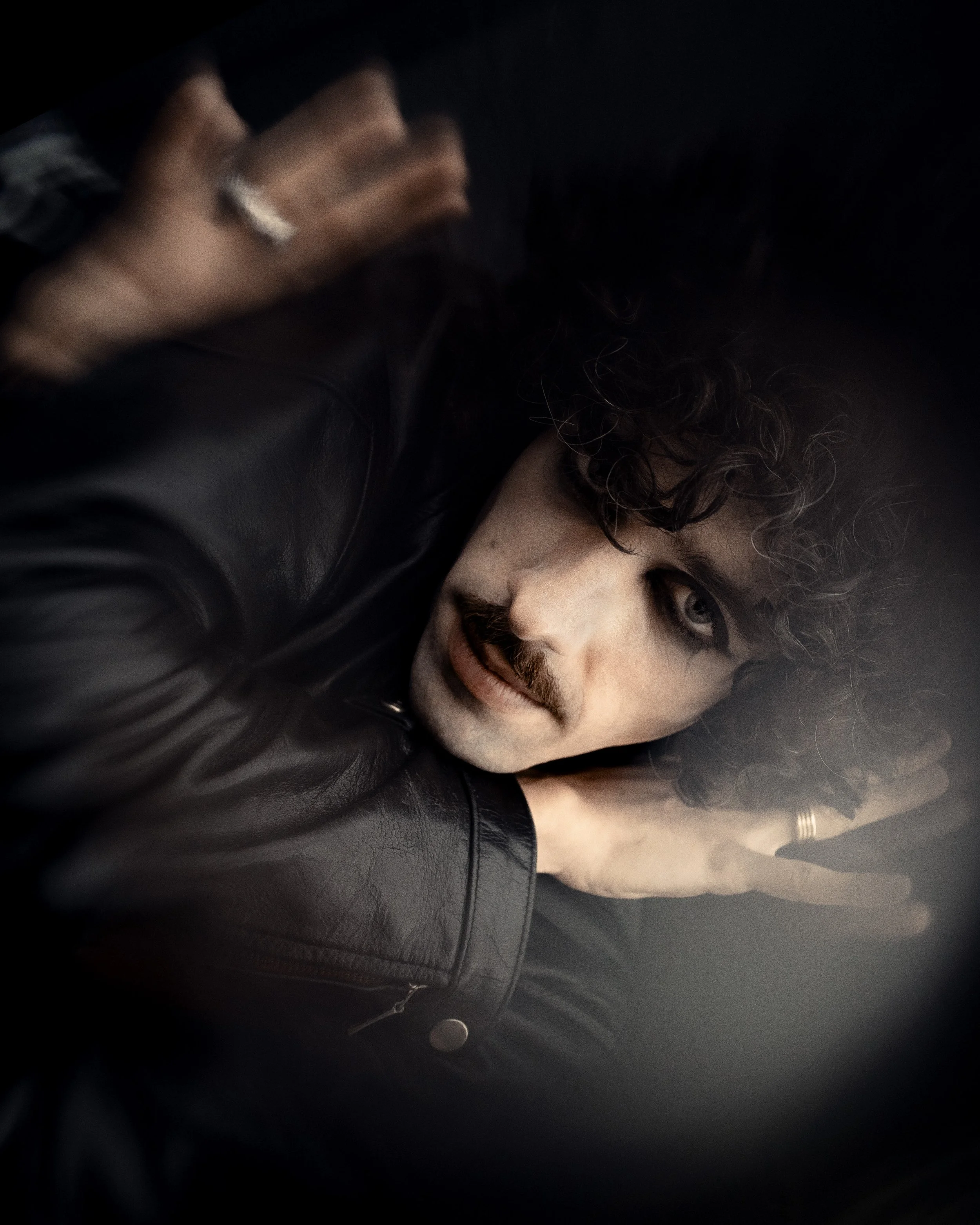
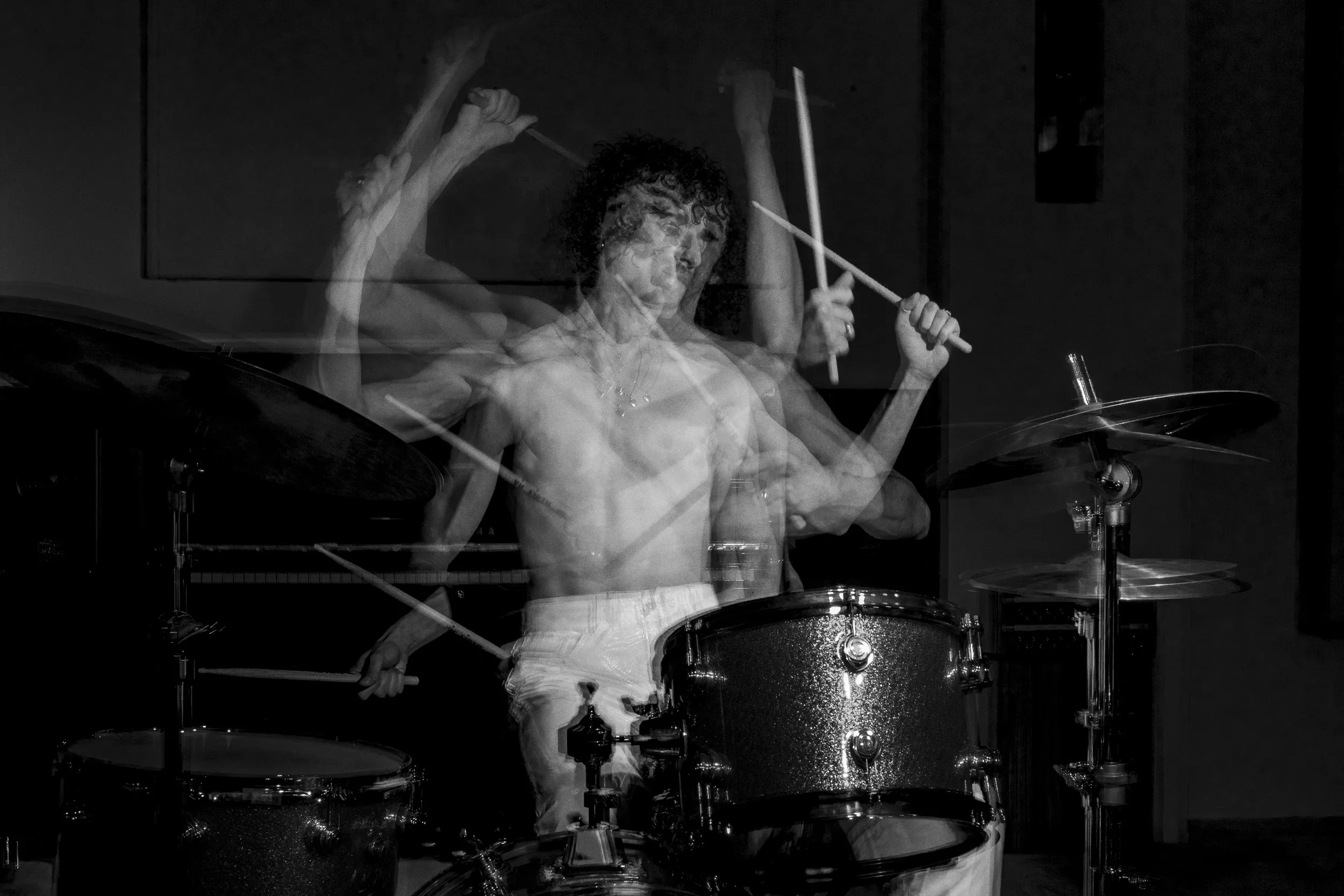
Can we talk a bit about your journey as a performer and musician? It’s quite an unusual story. You’ve just been going crazy on the drums here for the photo shoot, which was your first instrument, right? But before that even you were dancing as a little kid growing up in Dallas…
Yeah, I was doing ballet and tap when I was like 5, and then got into break dancing as well. My parents actually met in a dance class. My mom is a librarian, and my dad was a DJ, so the whole house was books, records and dance posters. I think maybe subconsciously I was absorbing that as a kid. And from there, I picked up drums and was playing in little neighbourhood punk bands when I was I like 8 years old. I was absolutely enamoured with Travis Barker, the drummer in Blink-182.
And then as a teenager you started DJing at local clubs right?
I actually started DJing when I was 11. I was going to a public school where I was the only white kid. So, I was really immersed in hip hop culture, and when I was like 15, I got asked to DJ at this teen club – it was massive – like 2000 kids, everyone African American. And when you're the only white guy in a room like that, you really have to fucking prove yourself. So I learnt very quickly – the kids were into this grassroots movement called Dallas Boogie. I was at the epicenter of that. Over time, artists were giving me their music directly, so I put out a mix tape and got 1000 copies pressed up, and overnight, it just spread and kind of helped ignite that movement.
This is when you became known as DJ White Chocolate, right?
Yeah, that’s how most people knew me. Ironically, a lot of people didn't even know what I looked like, so when I showed up to clubs they would actually turn me away. I looked like I was 12. So people would be like ‘there's no fucking way you’re him’ (Laughs) But after being immersed in that world for several years, it became very constricting. It was that typical hip-hop culture at that time – very straight, very homophobic. And around the age of 18, I just woke up to the fact that I was gay and knew I had to get out of there.
The two things weren't mutually compatible.
Not at all. You gotta remember at that time there was no representation of anyone in hip hop who was out and flying that flag. This is before Tyler The Creator, Frank Ocean… any of that stuff. So it was very cold turkey – one moment I'm playing all these clubs and the next moment I'm nowhere. This rumour started that I had died. But I just really had to shed that shell in order to allow that part of myself to breathe. That's when I started to really get into dubstep and electronic music, and putting all my energy into making beats in my bedroom.
“I’ve always made music from a place of adoration.”
Zach Witness
Then the big break was working with the one and only Erykah Badu – how did that come about?
I became obsessed with this remix I was doing of her track Bag Lady – I worked on it for months, and set this intention of one day working with her. And that’s exactly what happened. She heard it on Soundcloud and reached out to me via Twitter and we ended up working together in my bedroom studio on a version of Hotline Bling by Drake. I remember the first time she pulled up in her Porsche outside my mum’s house – the license plate said ‘She Ill’ – it was kind of nuts. We ended up doing a whole album together. André 3000 came over to work on one of the tracks. That was insane. Like here I am with two of my biggest heroes in my bedroom making music.
That was a major turning point for you.
Absolutely. Most things don't change your life overnight, but that actually did. All of a sudden, I had a name. The New Yorker’s showing up at my house to do a piece, people like Q-Tip know who I am… crazy stuff. Frank Ocean asked me to do some stuff with him in New York. That's when I knew I had to get out of Dallas. But it wasn't until I came to London that I really clicked.
Why London?
Well, London was the first place where people were supporting my original music: Giles Peterson was playing me on his radio show. And England represented creative freedom for me. When people talk about good music here, they'll say ‘is it a tune?’ whereas in America, they'll say, ‘is it a hit?’ There's always this capitalistic angle to things there.
The music you first started making in the UK seemed to consciously go into more of a house direction.
It happened quite naturally. I did this house remix of 17 Days by Prince that Annie Mac picked up on and that kind of opened doors for me. I did some remixes for Dua Lipa and Defected brought me into their Glitterboxx parties. It wasn't intentional, but made a lot of sense, because my background is dance, and house music is a queer genre, so it all kind of fit together.
That idea of house music being a queer genre, obviously because its roots were in the black, gay scene in Chicago house, and then hip hop being seen as very masculine, very straight… you’ve been deeply immersed in both so you have a kind of unique perspective to bring the two together.
That’s really the cornerstone of what I do. I’ve always wanted to build a bridge between straight culture and queer culture, because I've grown up between those two worlds. That’s why it was inevitable that I would meet someone like Infinite Coles and make music with them.
I wanted to talk to you about these tracks you’ve just put out with Infinite – especially Dad & I – they feel very fresh, very powerful and new.
Infinite speaks to that bridge I talked about in an even more profound way, because he's the son of Ghostface Killah, and Wu-Tang Clan were almost like the original architects of homophobic hip hop and to then have a flamingly gay son is I think one of the most amazing things on behalf of creation… But unfortunately, as you’d expect, Infinite had a really tough time growing up in that world, and it resulted in his father ostracising him from the family. So when I met Infinite, I could feel that pain, and it felt like I was seeing myself reflected back through it. Infinite was afraid to speak about his relationship with his father and being queer at the time, but you know often it's the things that you feel most afraid to express that end up being the most powerful. I’m so glad Infinite was brave enough to go there. It's really inspiring. I honestly think it’s really important in terms of hip hop music because it speaks to people who have not had a voice in that in a really honest and unique way.
“Often it's the things that you feel most afraid to express that end up being the most powerful.”
Zach Witness
Before you go, I have to ask you about your work with Doechii. She’s one of the hottest rising stars in the world right now, but you worked with her right near the beginning…
She’s another artist that I felt a deep connection with. You could tell from the start she was a star. I’m really proud of that track we did – Alter Ego – it was one of the first things she put out that really brought together the queer community and the hip hop community. It was amazing to see a lot of queer people making dance videos to it – that felt really cool.
Plus, that track also ended up being used for a Lip Sync Battle in Drag Race.
Yes! Last season with Lexi Love. I’m a huge fan of the show, so that was pretty amazing.
Do you want to keep producing other artists or is your focus now more on your own stuff as an artist?
I’ll always be collaborating with other people, but it feels very important to focus on my own thing right now. I feel I’ve kind of earned my stripes as a producer. I've had hits, I've worked with my biggest heroes. I want to make my own music, use my own voice, create my own world now. That’s why I called this new EP New Life. Because it feels like it's another shedding, a new beginning kind of thing. It feels like for the first time in my life, things are actually integrating from all aspects – creatively, sexually and spiritually – and that feels like a solid foundation to tell my own story from.

Team credits
Interview: Adam Mattera
Photography: Christian Trippe
Photo assistant: Ezra Evans
Clothing: Costume Studio
Location: Baltic Studios
READ NEXT